
Bishan Lakeview BTO 2026: Flying Star Unit Selection Framework
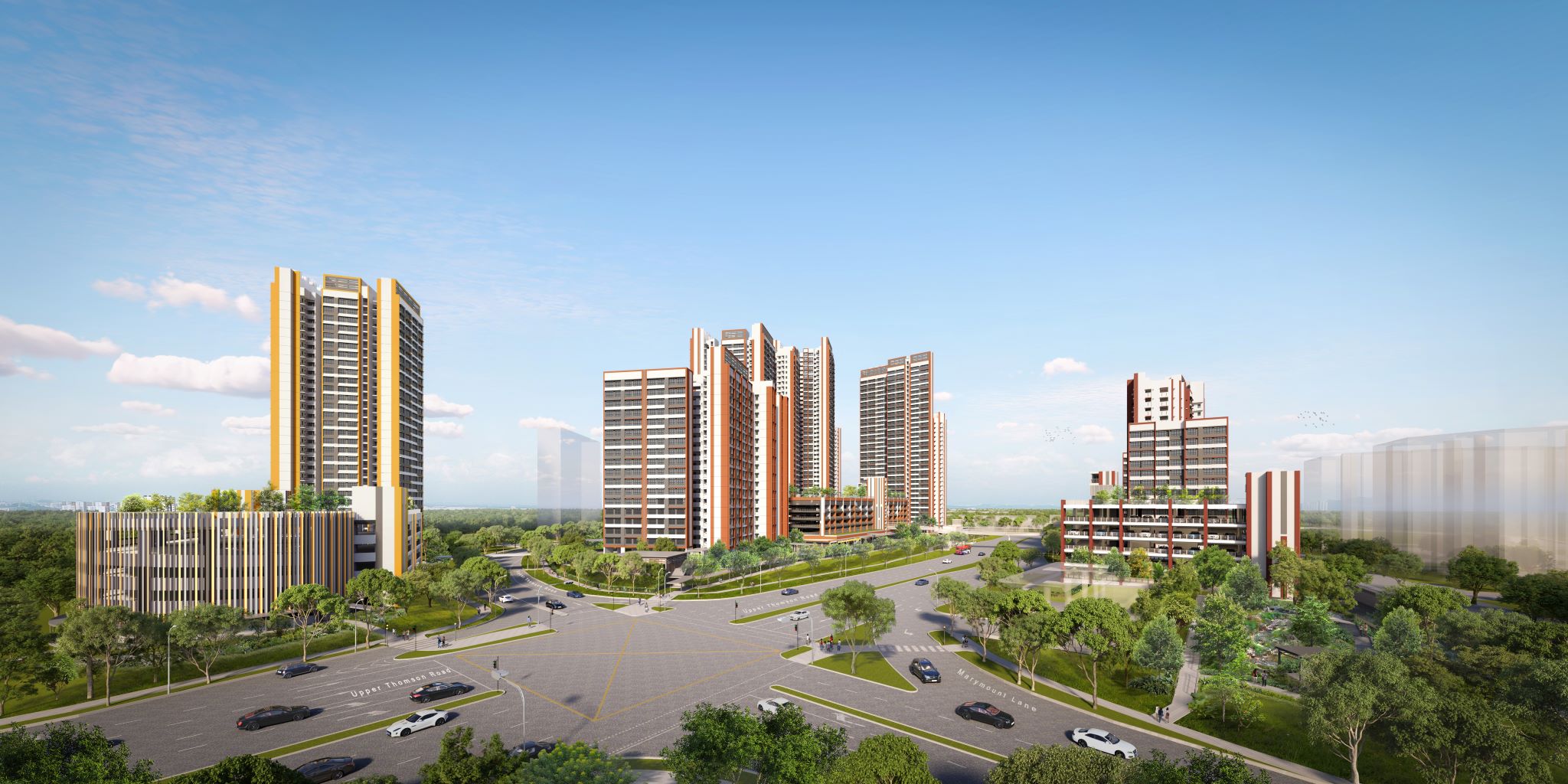
The June 2026 BTO ballot is open. Bishan Lakeview is the first public housing development in Upper Thomson in over 40 years — 1,210 units across five blocks, rising between 18 and 40 storeys, with MacRitchie Reservoir views and Plus classification. Buyers with queue numbers are comparing unit stacks using floor plans and block diagrams alone. There is no show flat. The orientation of your main door, the position of your master bedroom within the block, and the sector your unit occupies are the only structural inputs available before you commit.
Most buyers compare level, price psf, and proximity to lift lobbies. These are practical considerations. But they answer a different question from the one a Flying Star framework asks: which stars are active at the key apertures of this specific unit, and what do those stars determine for the occupants over the building's occupied period?
This article explains the Flying Star methodology for BTO unit evaluation. It covers how a natal chart is generated, how Period 9 affects every new completion, how unit position within a block translates into sector placement, and what to look for in the Bishan Lakeview floor plan release before you submit your ballot application.
It does not tell you which unit to pick. That requires an on-site compass reading and a specific analysis of the block's facing direction — work that constitutes a paid Property Screening engagement. What this article gives you is the framework: the questions to ask before you ballot, and the structural logic behind them.
Why BTO Unit Selection Without a Framework Is Incomplete
Standard BTO unit selection advice covers stack analysis (avoiding units above multi-storey carparks or rubbish chutes), facing direction preferences based on personal compass directions from the Eight Mansions school, and floor level considerations. These are valid starting points. But they address only part of the structural picture.
Flying Star Feng Shui adds a dimension that Eight Mansions analysis alone cannot provide: the building's natal chart. A Flying Star natal chart is fixed to the structure itself — not to the occupant. It is determined by two inputs: the period in which the building was completed, and the direction the building faces. Once those two variables are known, the natal chart is calculable. It does not change as different families move in and out. It is the fixed energetic profile of the building for the entire period it operates in.
The implication for BTO buyers is significant. Two applicants balloting for units in the same block may have entirely different structural outcomes — not because of their personal lucky directions, but because of where their specific unit sits within the block's natal chart.
What a Flying Star Natal Chart Is and How It Gets Fixed to a Building
In Flying Star Feng Shui, time is divided into 20-year periods, each governed by a specific star number. We are currently in Period 9, which runs from 2024 to 2043. Every building completed during this window carries a Period 9 natal chart.
A natal chart is a 3-by-3 grid of nine sectors, corresponding to the eight compass directions plus the centre. Each sector holds two key numbers: a Mountain Star and a Water Star. The Mountain Star governs health, relationships, and personal wellbeing. The Water Star governs wealth, career, and financial outcomes. Together, they produce the energetic profile for each sector of the building.
The specific arrangement of Mountain Stars and Water Stars across the nine sectors is determined by the building's facing direction. A block facing North carries a different natal chart from one facing Northeast or Southeast — even if both are Period 9 completions. This is why two blocks within the same BTO launch can have meaningfully different Flying Star profiles.
For Bishan Lakeview, the facing direction of each block will be determinable once the site plan and block orientation are confirmed. The blocks are oriented to maximise reservoir views and comply with HDB layout standards — but their compass bearings will vary. Until those bearings are confirmed with an on-site reading, the natal chart for each block remains unconfirmed. What is known is that all five blocks are Period 9 structures, and Period 9 activates specific star combinations that differ significantly from Period 8 completions.
Why Period 9 Changes the Structural Calculation
The shift from Period 8 to Period 9 in 2024 altered which Flying Stars carry active energy. In Period 8, the star #8 (Earth element, associated with wealth accumulation and stability) was the ruling star. Properties with #8 Water Star at the facing sector performed strongly during that window.
In Period 9, the ruling star is #9 (Fire element, associated with Li trigram — clarity, recognition, and future-facing growth). The star #1 (associated with career, intelligence, and water-element prosperity) becomes the secondary prosperous star. Stars #8 and #9 now carry future-oriented energy. Star #8, while still favourable, begins its transition toward a more passive role over the course of the period.
For BTO buyers selecting units in 2026, this transition has a direct implication. A Period 9 building with #9 Water Star at the facing sector is structurally well-positioned for the next two decades. A unit with #1 Mountain Star at the master bedroom carries a different profile from one with #5 Mountain Star in the same position. These are not abstract distinctions. They translate into the energetic conditions that occupants will live within for the duration of their tenancy — which, for a BTO under Plus classification with a 5-year MOP, is a minimum of five years.
How Your Unit's Position in the Block Determines Which Stars Are Active
The natal chart divides a building's footprint into nine sectors arranged by compass direction. Your unit occupies one or more of these sectors, depending on its size and layout relative to the block's centre point.
The critical apertures are the main qi and the master bedroom. In Flying Star analysis, the main qi determines which Water Star governs incoming energy — wealth and opportunity flows. The master bedroom determines which Mountain Star governs the resting and restorative environment of the primary occupant.
For most HDB units, the main door faces the corridor side of the building. The direction the corridor faces within the block, relative to the block's centre, places it in a specific sector of the natal chart. A corridor-facing North within a block facing South carries the South natal chart's North sector stars. The master bedroom, typically positioned toward the back or side of the unit, occupies a different sector — often carrying different star numbers from the main door sector.
This is why unit selection is a sector-placement exercise as much as a preference exercise. The question is not just which floor or which stack — but which sector of the natal chart does this specific unit's main door and master bedroom occupy, and what stars are active in those positions?

Why Two Units on the Same Floor in the Same Block Can Have Different Readings
Two units on the same floor — same block, same level, adjacent stacks — can carry different Flying Star profiles if they sit in different sectors of the natal chart.
A high-rise block does not have a uniform sector across all units. The sector a unit occupies is determined by its compass position relative to the building's centre point, not its floor level. A unit toward the South end of a block is in the South sector. A unit toward the North end is in the North sector. A unit positioned at the Northeast corner is in the Northeast sector. These are not equivalent positions in the natal chart — each carries different Mountain Star and Water Star combinations.
This distinction becomes especially relevant in a development like Bishan Lakeview, which spans five blocks at varying orientations across a large site. Stack selection instinct typically focuses on view, proximity to amenities, and floor level. Flying Star analysis adds the sector dimension: within the block I am considering, which sector does this unit's main door occupy, and which star is active at that position?
The answer is not available from the floor plan alone. It requires knowing the block's facing direction (compass bearing), calculating the natal chart for that facing direction and Period 9, and then mapping the unit's position within the block to the corresponding sector. This is a precise calculation — not an approximation.
What to Look for in the Bishan Lakeview Floor Plans Before You Ballot
When HDB releases the floor plans and site layout for Bishan Lakeview, the following structural indicators are worth examining before you submit a ballot application.
Block orientation: The site plan shows how each of the five blocks is positioned on the land. Identify which direction each block's main lobby faces — this is typically the most active facade, facing toward the road or open space rather than toward an adjacent block. This facing direction is the first input for calculating the block's natal chart.
Unit position within the block: For your shortlisted stack, identify where the unit sits relative to the block's physical centre. Is the main door corridor on the North side, South side, East side, or West side of the block? This determines which sector your main door occupies in the natal chart grid.
Master bedroom orientation: In the unit floor plan, the master bedroom is typically at one end of the unit. Determine whether it sits toward the front (corridor side) or rear of the block, and whether it is positioned more toward the North, South, East, or West end of the building footprint. This places it in a specific sector.
Plus classification implications: Bishan Lakeview carries HDB's Plus classification — a 5-year MOP and subsidy clawback on resale within the first 10 years. The structural quality of your unit selection carries more weight than in a standard BTO, because your holding period is extended by policy. A unit with structurally unfavourable star placements is one you will occupy for at least five years before any option to exit.
These are the observable structural inputs. What you cannot determine from the floor plan alone — and what requires a Flying Star analysis with compass readings — is the specific star numbers active in each position, whether those stars are in a favourable or unfavourable configuration, and how they interact with the current and future period energy cycles.
After Unit Selection: The Structural Step Before You Sign
Once you have selected your unit, the structural analysis does not end. The next decision point — the one that most buyers treat as purely administrative — is the OTP signing date.
In Classical Qi Men Dun Jia, the moment a formal action begins carries an energetic imprint from the conditions active at that time. Your OTP signing is the contractual start of your relationship with the property. It is an irreversible commitment. The date and time within which you sign determines the Qi Men chart active at commencement.
An inauspicious date does not invalidate the transaction or guarantee problems. But an auspicious date, selected within the fixed window of your OTP exercise period, provides a structural start condition that costs very little to access and cannot be recovered once the window closes.
The 4th Lunar Month is open from 5 May to 4 June 2026. If your BTO unit selection and OTP exercise window falls within this period, Qi Men date selection is calculable now.
Timing Strategy (Qi Men Date Selection) — S$188 | DM via telegram
This covers OTP signing, Sales and Purchase Agreement, key collection, and renovation commencement — four milestones where date timing adds a structural advantage to an otherwise fixed transaction.
How 9Heavens Approaches BTO Property Screening
9Heavens does not provide verdicts on specific units without a paid engagement. A Flying Star analysis for a BTO unit requires the block's confirmed compass bearing, a calculated Period 9 natal chart for that specific facing direction, and mapping of the unit's position within the natal chart grid to determine the stars active at the main door and master bedroom.
This work constitutes a Property Screening engagement. It produces a specific, decision-grade output — not a general assessment of whether the unit has "good feng shui." It tells you which stars are active at the key apertures, what those stars mean for the occupant profile and timeline, and whether the unit's structural profile aligns with your decision horizon.
The framework explained in this article is the methodology. Applying it to a specific unit in Bishan Lakeview or any other BTO development is a separate, bespoke engagement.
If you are in the ballot window and want to understand how your shortlisted unit sits within a Flying Star framework before you commit, the starting point is a Property Screening. Visit 9heavens.com to review the consultation options if your immediate concern is the OTP signing date following unit selection.


 Chat with Us